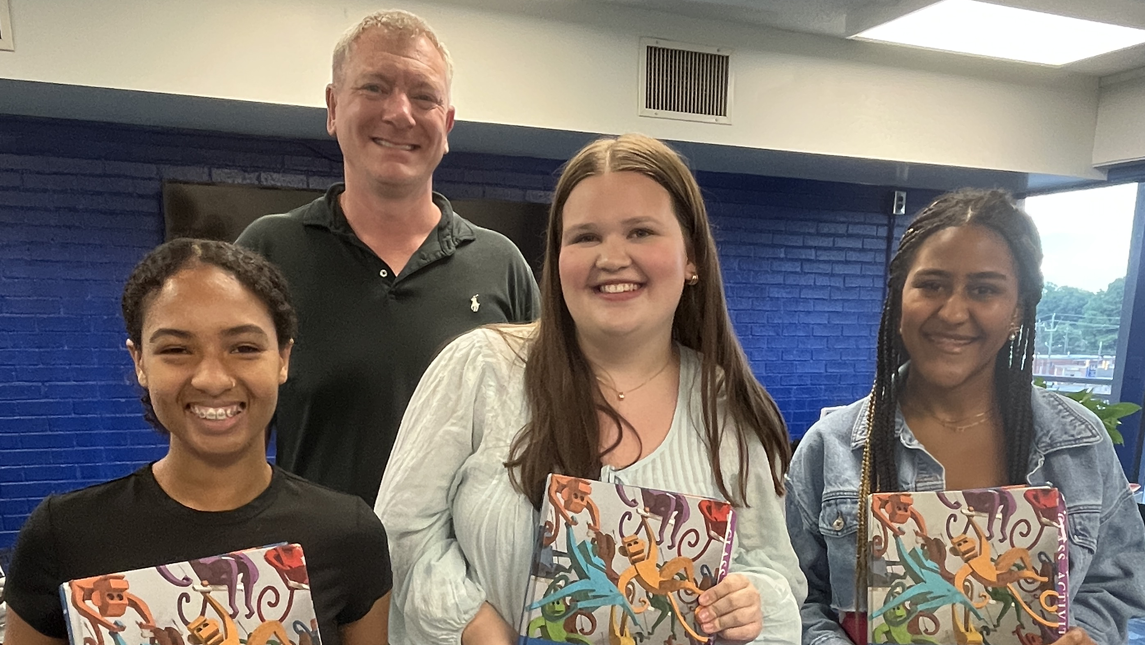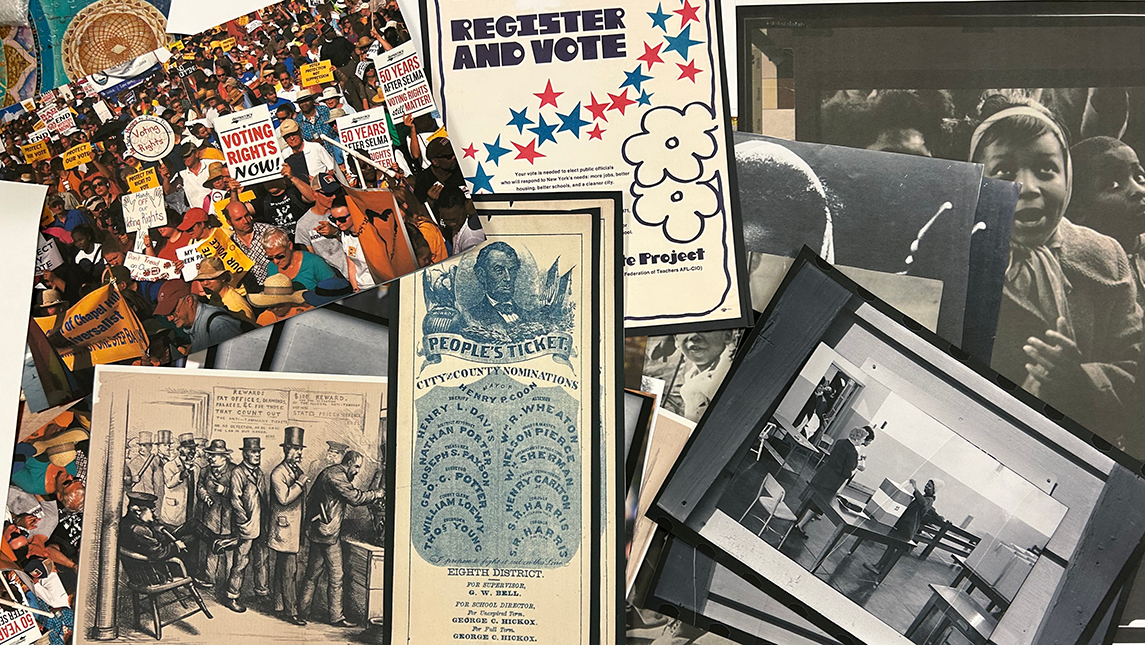
Thanks to a nearly $25,000 grant from the Teaching with Primary Sources Partner Program through the Library of Congress, Dr. Ryan Hughes in the Department of Teacher Education and Higher Education has engaged in a project with a local charter school that will combine STEM and social studies for students in kindergarten through second grade. The grant also allows for professional development opportunities for the teachers of those classes.

Hughes has been working with the school for the past few years, but the grant has allowed him to expand his work. He has been working to develop specific social studies curriculum that integrates social justice topics and hands-on making projects.
While using primary sources from the Library of Congress, students learn about topics such as voting, civil rights, and environmental advocacy. They then take what they learn and use STEM to create projects around the subject area.
Hughes said, “In first grade, we’re going to focus on voting injustice. The students will learn about what voting is and then they’re going to make a light-up voting booth with LEDs. Then the kids will think of a question, and someone can vote by pushing a button for the different color LEDs to vote yes or no. We’re going to make a life-size polling booth that the students can use as a prop and to role-play voting in an election.”
Building a database of primary sources is part of the project. In regard to the voting curriculum, Hughes wants to utilize five historical sources that show perspectives on voting – women’s suffrage or African American suffrage. He will then use five modern sources that relate to the issue within the community.
Hughes said, “In kindergarten, we teach about civil rights. We talk about the Greensboro sit-in, and they visit the Civil Rights Museum. We print pictures of the Greensboro Four sitting at the counter in large format so they’re really easy for the students to analyze and look at what’s going on in the details.”
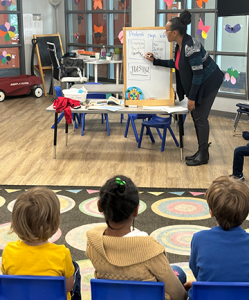
Second graders will build maps of Greensboro using LED circuits to show areas with pollution and areas where pollution has been cleaned.
Lauryn Peten is an elementary education major at UNCG who is completing her student teaching in one of the classrooms involved with this project and has been impressed by the understanding that her students have on these topics. She said, “They have really interesting thoughts and relate them to their own experiences. It’s very impactful to see little minds think of these big topics that we don’t really think of them having to think about.”
Peten has seen the students become strongly engaged in the hands-on work. She added that the discussion of justice and advocacy will be a benefit for both the school and general community as the students learn how those two terms work together.
Hughes will design the curriculum and collect data by observing the teachers and reviewing audio recordings of the lessons. There will also be five professional development sessions that include explaining the theory behind the topics and taking a deeper dive into the plans.
With state testing putting more emphasis on other subjects, Hughes wants to see an increase in social studies activities for elementary school students.

He said, “I taught second and third grade when I was a teacher for eight years. In my experience, there is not a lot of social studies that goes on in elementary school even though it’s required to get a license to teach elementary. You usually only see it in fourth and fifth grade.”
Peten echoed those sentiments, saying, “My social studies was rooted around us knowing about the Piedmont region of North Carolina or talking about geography. Growing up, I would have loved to hear stories about Henry Box Brown or other social justice topics that I didn’t get. I think (the students) will be more aware when they get into middle school and high school and able to talk about these topics.”
Hughes believes this is an area where much research does not exist, both with the grade levels and with how social justice is taught to children of that age.
Ideally, Hughes would like to continue to grow the project, saying, “I started with kindergarten and we’re doing first and second, so early elementary, but I want to take it up to eighth grade so that there are social studies units that integrate STEM, hands-on making, and social justice topics throughout the whole school.”
He wants to be able to create an online resource center that would allow teachers to access the curriculum and projects so other classrooms can implement the lessons in their own classes.
His research will look at both student and teacher learning. Students will receive both a pre- and post-assessment to see what they have learned from the lessons and to understand how effective the teaching was. He will also be able to gather any misconceptions and general thoughts the students have on the topic. With teachers, he hopes to discern how they use primary sources, how they engage students, and determine what kinds of professional development and support can help them be successful.
Hughes said, “Having more models of what it could actually look like is going to be a great thing to share.”