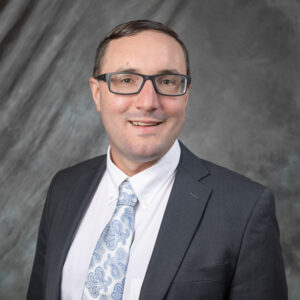
Dr. Noah Lenstra, an associate professor in the Department of Information, Library, and Research Sciences (ILRS), came to UNC Greensboro in 2016 where he teaches classes in library and information science. The department boasts the nation’s eighth-ranked school library media specialty area and the 23rd-ranked Master’s of Library and Information Science program.
Why UNCG?
The university’s focus on research and community engagement helped to draw Lenstra to Greensboro. Since being on campus, he has found that, while the School of Education consists of five separate departments, that there are ways to work across those areas.
Lenstra said, “I enjoy the collegiality of the School of Education. I’ve had no difficulty finding mentors and opportunities, especially in Dr. Scott Young’s Impact Through Innovation initiative. That’s been a major catalyst to some of my projects and has allowed me to get feedback and ideas from other faculty.”
Current Projects
Collaboration With Public Libraries
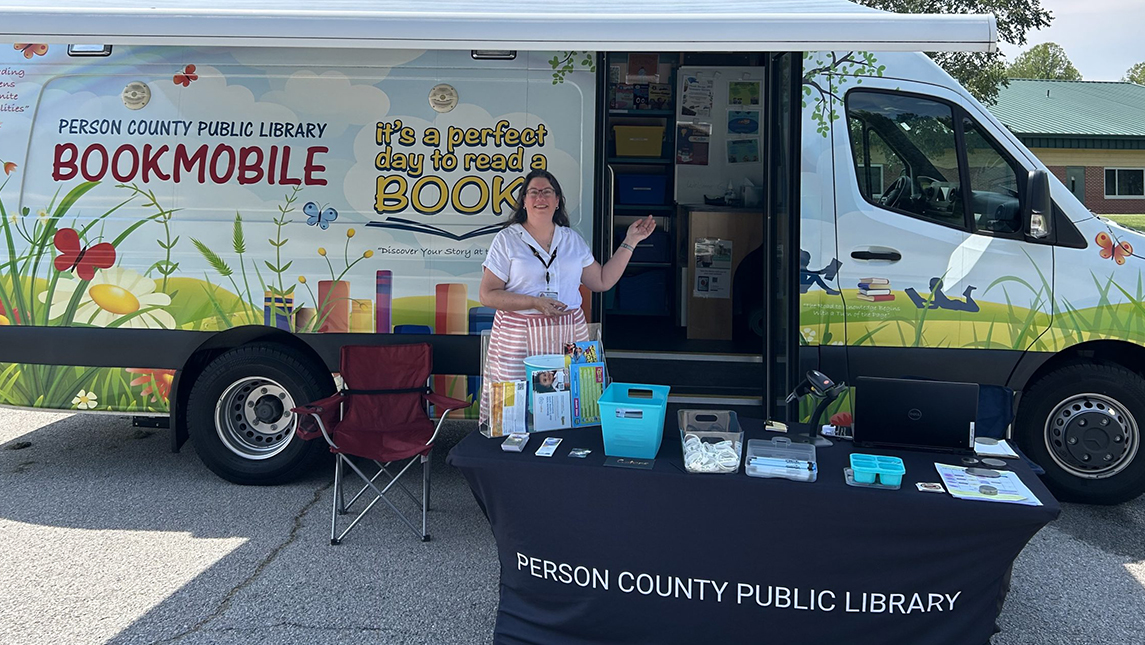
Much of Lenstra’s work focuses on how public libraries are positioned and finding ways to utilize those institutions as a partner in public health. That led to the founding of Let’s Move in Libraries. This project focuses on supporting healthy living in public libraries and has assisted with initiatives in libraries across the United States, Canada, and other countries around the world.
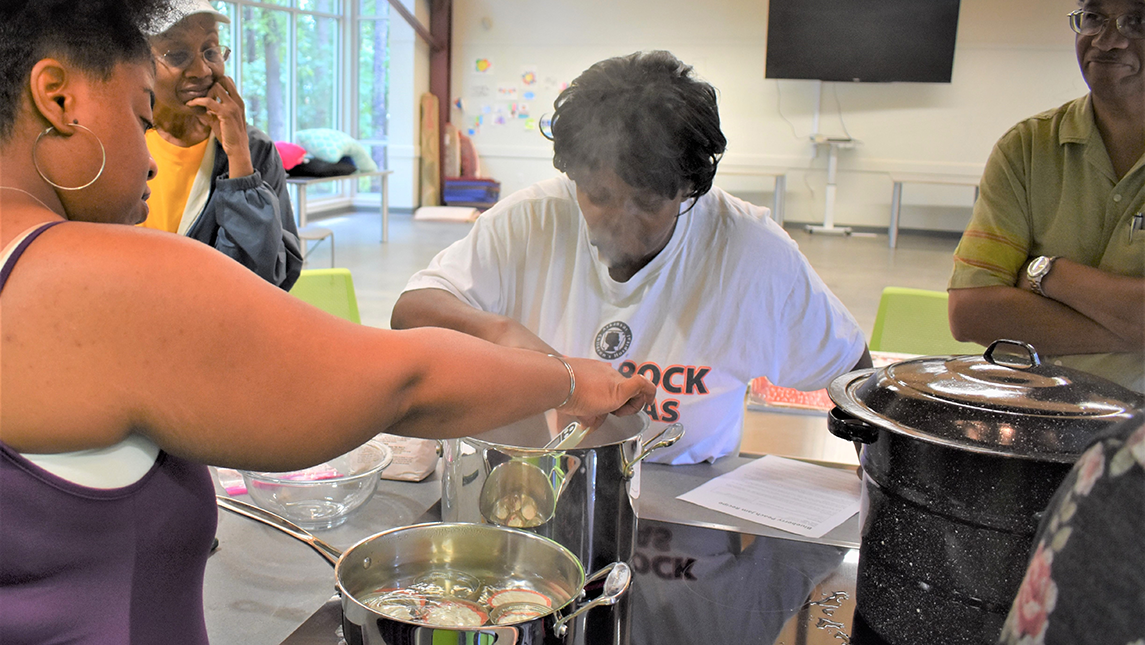
Among the current projects is a partnership with Oregon Health and Science University funded by the National Institutes of Health involving a clinical trial examining the effectiveness of implementing walking and civic engagement groups at rural public libraries. Another project funded by the National Science Foundation focused on organizing a national conference to see how libraries can “work with partners to be incubators of climate action and learning about climate science.” A third is with the Mellon Foundation that involves holding focus groups with public librarians to learn about their experiences working in collaboration with community partners to support food access and food security.
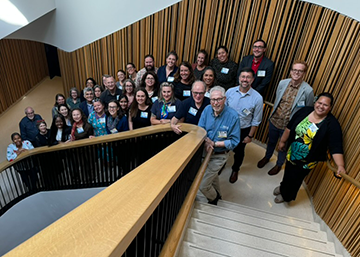
Public libraries are not often viewed as resources outside of books, computer access, or study spaces. Lenstra’s initiatives are changing that.
Lenstra said, “If public libraries are an institution that really exists to ensure we have a robust safety net for people who might fall through the cracks, whether it be in terms of access to employment or access to resources, it logically follows that there are opportunities to think about other ways that they can play a support role in the many issues communities face.”
“I think a lot of people think of public libraries as digital literacy, but they’re not the only institution that supports digital literacy. Senior centers, for instance, often have computer labs and digital training opportunities. Then, as I started thinking about public libraries and parks and recreation agencies, they have an awful lot in common – they both serve seniors, they both support digital literacy, and they’re both at the heart of healthy, vibrant communities. They’re both a kind of open infrastructure that really has no restrictions on who’s allowed access. That was the starting point for rethinking the position of public libraries in the community.”
That thinking has led libraries to create food pantries, host music and movement classes, explore hydroponics, expand access to performing arts, and provide mental health services. Some of these opportunities have been documented by Let’s Move in Libraries, particularly in its annual “I Partner with My Public Library Awards,” which highlights community collaborations that led to new initiatives in communities.
Working With Students
While the ILRS department does not have Ph.D. students, Lenstra does work with master’s students who help do data analysis and data curation. They also assist with writing and creating visualizations.
Lenstra said, “Students are going to have the opportunity to take classes with me and hear about some of the cutting-edge work that is being done in public libraries.”
What To Do With $1 Million
Research and outreach require funding. While most funding is found through grants and internal sources, philanthropic efforts can make a difference in the work being done.
Looking at the impact $1 million could have on his work, Lenstra said, “What would be awesome to do would be to start a placement initiative focused on evidence-based practice wherein we recruit and support a cohort of master’s degree students. They work together to understand the foundations of incorporating evidence into daily practice and then go out and continue that. I’ve seen in my research how evaluation is a sticky point for public libraries. They increasingly know how to collaborate with others to create new initiatives. They don’t yet know how to evaluate and communicate the impacts of that work. You help build the next generation of public library leaders that are ready to go out and integrate some of these cutting-edge ideas and work successfully with partners, and in public health, and parks and recreation, and the whole group of partners that we know make this work possible.”