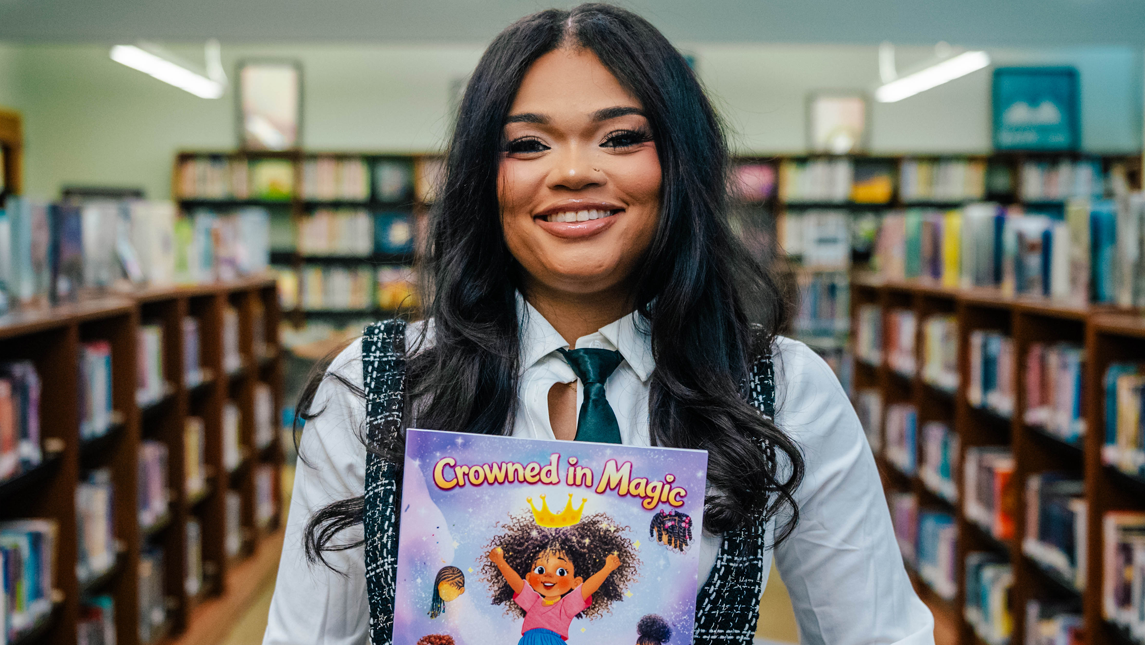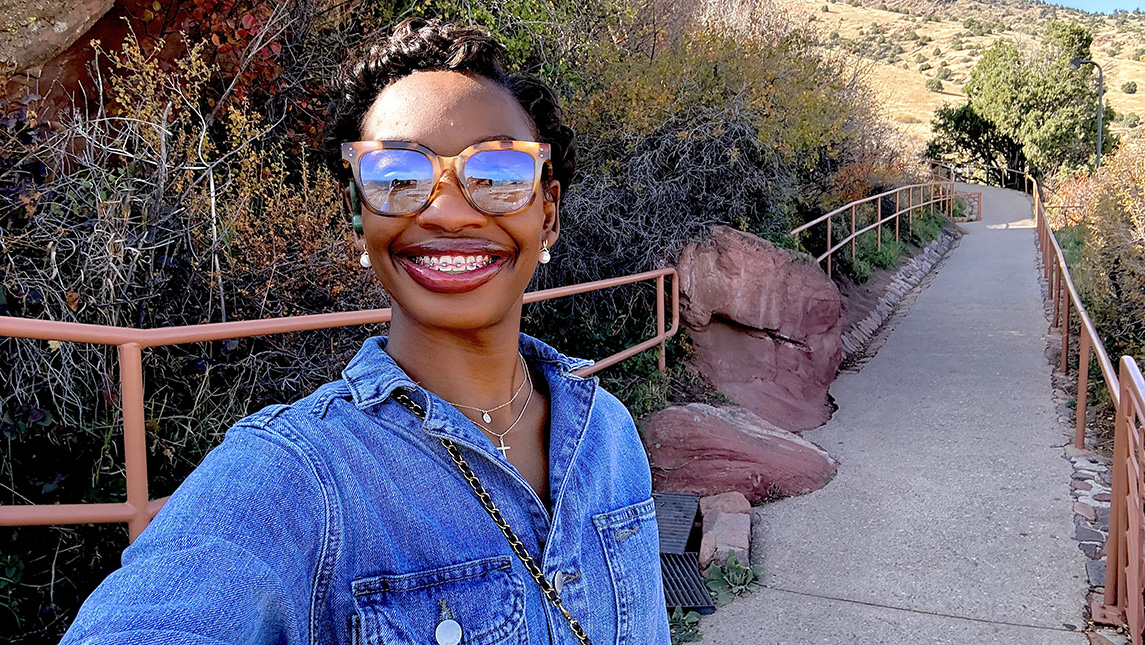
Adrianna Fields is from Maysville, N.C., and will graduate with a Ph.D. in Educational Studies in December.
Why Did you Choose UNCG?
After finishing my master’s, I wasn’t sure what to do. Still, I wanted to keep going. I’ve always valued education more than a degree as a neurodivergent student and scholar. It was sometimes hard to know if everyone would understand, support, or represent me. These moments made me think about other students asking, “Do I belong? Can I do this? Is anyone understanding my situation?” My social work background influenced my choice. Most of my social work experience has involved communities, organizations, systems, advocacy, and life-changing policies. Working with students with disabilities made me want to stay in education, even though I wasn’t sure how. My UNCG Educational Studies Ph.D. program, especially my focus on higher education, brought these interests together. I could combine social work, higher education, research, advocacy, disability, equity, and educational policy without leaving my background. Learning from professors with social work backgrounds and those who had switched fields was also meaningful. That showed me that everything I did before joining the program mattered and could shape my scholarship and career.
What is your favorite place on campus?
The library is my favorite campus spot. That was true throughout my undergraduate, master’s, and doctoral studies. I’ve always felt safe in the library. I usually go to the library if I need quiet to focus on something I’m reading or writing, extra resources, or time to myself. I also like that the library is more than a place to work. It lets me think creatively. With enough quiet to slow down, I can think creatively, connect ideas, and sometimes have my best ideas. I’ll probably be at a nearby café if not in the library. Even though I don’t drink coffee, I love nice cafés. Sitting in a library-like café makes me want to think, work, and relax. The library is my favorite place, with a nice café a close second.
What activities and organizations are you involved in on campus?
I serve as the Event Coordinator for HEDSA, where I collaborate with the leadership team to bring event ideas to life. I love the creativity involved, whether it’s designing promotional materials or coordinating activities for the semester. I’m also involved with a disability- and accessibility-focused student organization, something I’ve wanted to do since my undergraduate years, because representation matters to me as a neurodivergent student. Additionally, I work as a graduate assistant in housing, supporting first-year students as they transition to college and navigate their new environment.
What experience at UNCG has had the most significant impact on you?
One of the experiences that has impacted me most at UNCG came from an interaction with a campus office while I was advocating for myself as a neurodivergent student. I did not expect to experience it, especially after becoming more intentional and confident about advocating for myself and communicating what I need. It made me consider students who may experience something similar but may not yet know how to advocate for themselves, may not have someone advocating beside them, or may walk away from an interaction questioning whether they belong. The experience also reminded me of why I chose my dissertation topic. My social work background has always taught me the importance of advocacy, but experiencing something personally reminded me that advocacy can feel entirely unique when you are the person who has to speak up for yourself. It made me more intentional about how I carry myself, how I move through higher education, how I use the knowledge I am gaining, how I show up in my classroom, and how I can become a resource for other students. Most importantly, the experience did not make me want to step away from higher education. It reaffirmed why I want to be in it.
What has been your favorite class and why?
It is difficult for me to choose just one favorite class because two courses have been especially meaningful to me: ELC 745: Critical Disability Studies and HED 745: Equity, Inclusion, and Learning. I found Critical Disability Studies especially meaningful because it helped me articulate my educational experiences, questions, and observations. It made me consider how institutions, policies, environments, and social expectations can create barriers to disability. As a neurodivergent student and researcher, that was powerful because it allowed me to connect my lived experiences with the scholarly questions I want to investigate. HED 745: Equity, Inclusion, and Learning made me reflect on the difference between providing students with access to education and creating environments where they feel supported, represented, included, and given equal opportunities to succeed. These courses linked my social work background, life experiences, research interests, and career goals. They showed me that disability, accessibility, equity, representation, and belonging are part of my scholarship. They’re shaping my scholarhood.
What are your career goals?
Long-term, I want to work in higher education, educational policy, research, disability advocacy, and law. I want to work in the U.S. Department of Education or a similar educational policy environment where I can influence postsecondary students. I care about disability and neurodivergent student accessibility and accommodations. I want to ask if students can access, understand, use, and feel supported with accommodations, not just if they exist. Postsecondary students come from all backgrounds and ages, and our systems should recognize that there is no single type. My Ph.D. will give me research and higher education knowledge to understand these systems, while my social work background will focus on advocacy and people’s experiences. Eventually, I want to study law to apply legal knowledge to disability rights, education policy, and advocacy. My career goal is to change systems so students don’t have to fight for equal access, accommodations, representation, and educational opportunities.
What made you want to choose a career in This Field?
For years, I couldn’t say, “This is why I chose higher education.” When I consider my experiences, I understand why I chose this career. I just had to choose a major that combined my interests, experiences, and values. My varied roles shaped my higher education career. From undergraduate to doctoral, I worked as an RA, which helped me build community, help students adjust, and understand how college life affects people. I taught FYE in my first year of Ph.D. school, giving me another chance to help students navigate college. As these encounters reminded me, I enjoyed helping students navigate education. Social work has shaped my higher education approach. Some underestimate how much social work can help in college. Social work taught me to study the whole person, community, organization, system, policy, resource, and environment. I’ve worked at the mezzo and macro levels of social work, so I naturally saw higher education as a system that can help or hurt students. I learned advocacy, cooperation, resource development, and how organizations can meet community needs. Many of those concepts were in higher education, so I thought my past experiences might apply. Research also influenced my college choice. My research and collaborations with other academics have provided deeper insights into students, institutions, disability, equality, policy, and student achievement. When studying, I often thought, “Oh, this is why I chose higher education. This keeps me interested in art. I support education because of this.” My educational policy fellowship was crucial because I want to work in policy. I want to work for the U.S. Department of Education, preferably in a capacity that promotes disabled children’s access, accommodations, and student achievement. Every event teaches me something new and opens another door to explore. I don’t know where this adventure goes.
What advice would you give a student considering UNCG and the School of Education?
My first advice to a student is that your journey will take time. As much as we love having a plan, do not become so attached that you forget to grow. Keep your plan, but allow yourself grace when life changes it. Taking classes is a sacrifice. Passionately pursuing something requires sacrifice. Events inside and outside school may make the journey feel like a battlefield. You may wonder if you’re doing enough, if you belong, or if you should keep going. But I’ve learned that some experiences can shape how you present yourself to others. You may meet a student whose experience is similar to yours in a different way, and you will realize how important it is to see, listen, and encourage them.
Request assistance next. Avoid silence when you need help. Don’t let someone’s title, label, the thought that “they won’t understand me,” or a difficult interaction stop you from asking questions and getting what you need. Being more open to asking for help helps you succeed in your program, education, and life. I also advise students to trust their classmates and build community. I struggled with that when I started my program. I sometimes felt odd. I sometimes wondered if I could have the same conversations with my classmates because I didn’t always have the same origin story, professional background, or career experiences. I learned you don’t need the same story as your classmates to learn from or connect with them. Participate in your online or in-person program. Talk to people. Ask queries. Study together. Ask classmates for help. Let people support you and let yourself join the community instead of deciding not to.
Above all, forever grace yourself. Your journey is unique, as is how you experience it. Accept that this is learning. You improve by asking, receiving, seeking, experiencing, and learning. Plan ahead. Focus on what matters. Request aid. Find community. Keep learning. Be kind to yourself throughout.
If you are a School of Education student who would like to participate in our Spartan Voices series, please complete this form.