
An assistant professor in the Department of Educational Leadership and Cultural Foundations (ELC), Dr. Lalenja Harrington originally came to UNC Greensboro in 2007 to serve with Beyond Academics (now Integrative Community Studies), a program for students with intellectual disabilities who want to further their education.
While serving in that capacity, Harrington earned her Ph.D. before becoming an ELC faculty member in 2022.
Why UNCG?
In UNCG, Harrington found a place that was “invested in making education accessible to everyone who wants to be in the space.”
She has built relationships with colleagues within the department, a space that has become a home to her. She said, “If I’m going to be in higher ed, it’s going to be in a department like this. I’m very happy that I was able to come through it as a student and continue to be here as faculty and helping to facilitate those spaces that are more accessible.”
Current Projects
Much of Harrington’s work is centered around course-based undergraduate research experiences and she has been able to meld teaching, research, and art into her projects. While teaching in the Honors College, Harrington’s class taught using theater as a research methodology.
Harrington said, “I’m really interested in engaging college students in the qualitative research process, in giving them an opportunity to experience arts-based research methods.”
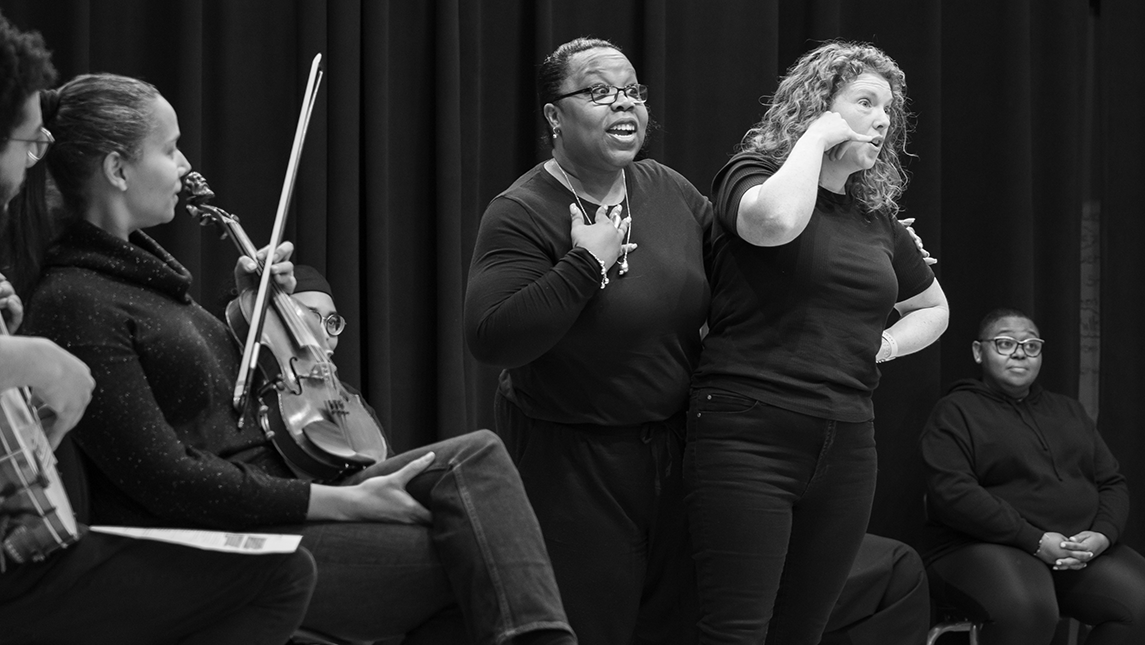
She is also using applied theater to identify community concerns, strategies, and priorities. For year, Harrington has been working with the community in Princeville, N.C., the first town chartered and independently governed by African Americans in the United States. In a partnership with the Humanities Action Lab, she has been working with the UNCG faculty and Princeville community members through the Community Placemaking Action Lab, to engage in playback theater in Princeville.

These performances help to identify desires and priorities in the community. While working with community elders in the first year, a desire to support local youth was one of the many themes that surfaced. Taking that feedback, the following year the group mentored young artists who shared an interest in playback, and with those young folks integrated into the theater troupe, did a playback performance that centered youth priorities and experiences.
Playback theater is a form of improvised storytelling in which a group of actors are trained in various ways to improv a story. Members of the audience are then included to tell their stories as the actors improv it in the moment.
Harrington said, “For the individual, and what we were hearing from the folks in the community, is that the opportunity to be heard, seen, and witnessed through this art form was really significant and important.”
This may seem like an odd fit within an education setting, but Harrington said, “It is my belief that the forms of learning that we privilege – like writing a paper or taking a test – are very limited as far as being able to represent all of the different ways that people show what they know. I like to incorporate multiple modes of expression and ways of making meaning, including embodiment, in every class that I teach.”
Working With Students
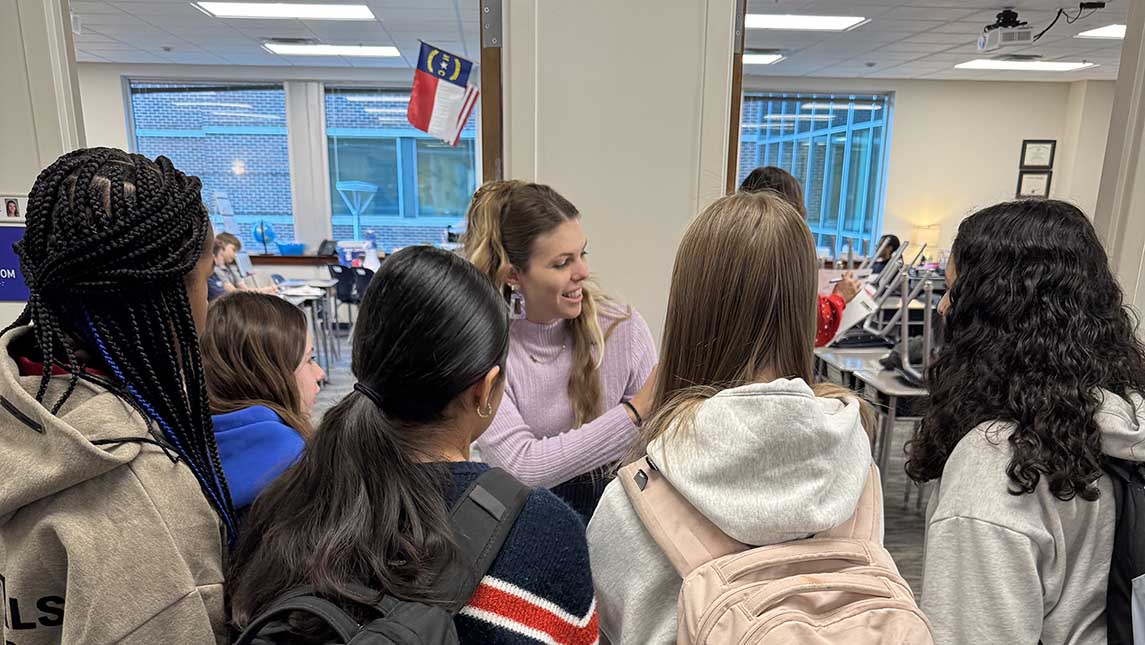
Students become engaged with Harrington’s work both through classes where they perform and create data and through becoming involved with outreach in Princeville. She has had multiple graduate students who have become involved in the community-engaged research process, and who have also become creative members of the acting troupe.
What To Do With $1 Million
Research and outreach require funding. While most funding is found through grants and internal sources, philanthropic efforts can make a difference in the innovative, life-changing work being done.
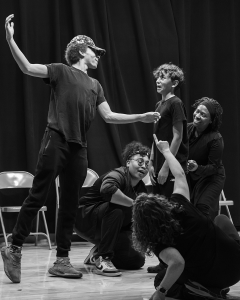
Looking at the impact $1 million could have on her work, Harrington said, “That’s a terribly exciting idea! My first thought would be how that money can go directly into the communities that we’re doing this work in to support them in whatever ways they’ve identified as important to them.”
She would want to find ways to allow the applied theater experience to make a big impact within the community where it is being performed. That could involve helping to train people within the community to lead these experiences themselves.
This form of outreach is rare, particularly in this region. Harrington thinks larger funding could help spread this type of programming. She said, “It’s really untapped and it can be really powerful in community. Our CPAL research team is really interested in finding ways to bring applied theater to other communities who are experiencing climate injustice and displacement, to highlight their stories and create opportunities for collective care through the artform. This type of funding could help to create a regional hub where training could be offered to help support local artists and the development of the artistry itself within those communities. We would also love to see how this funding could support applied theater work in schools as well.”